Asphalt vs Concrete Driveway in Surrey, BC: Which Is Better?
Asphalt and concrete are both solid choices for a Surrey driveway, but they perform differently in our climate. Here's an honest comparison to help you decide which one is right for your property.
The honest answer for Surrey homeowners
Both asphalt and concrete make good driveways. Neither is a bad choice. But they perform differently in the Lower Mainland's climate, and the right answer for your property depends on a few factors worth knowing before you commit.
The short version: asphalt handles Surrey's wet weather well, costs less up front, and is easier to repair when something goes wrong. Concrete lasts longer with less maintenance but is more expensive and harder to fix. For most residential driveways in Surrey, asphalt is the practical choice. But there are situations where concrete makes more sense.
How Surrey's climate affects the choice
The Lower Mainland gets around 1,150 mm of rain a year. Most of it falls in the cooler months. We also get light frost and the occasional cold snap, but nothing like the sustained below-freezing winters that interior BC or the prairies deal with.
That matters because concrete is more vulnerable to freeze-thaw damage than asphalt. In climates that cycle through freezing repeatedly, concrete cracks more readily and de-icing salts accelerate the damage. In Surrey, we don't see that severity, so concrete holds up reasonably well. But asphalt's flexibility still gives it an edge in wet conditions: it flexes slightly with ground movement rather than cracking cleanly the way concrete does.
The bigger Surrey-specific issue for both materials is drainage. A driveway that holds water degrades faster regardless of what it's made from. This is why grading and base prep matter more than material choice in our climate.
Asphalt driveways: the case for
Asphalt costs significantly less than concrete to install. For a typical Surrey residential driveway, it's a real difference in up-front investment.
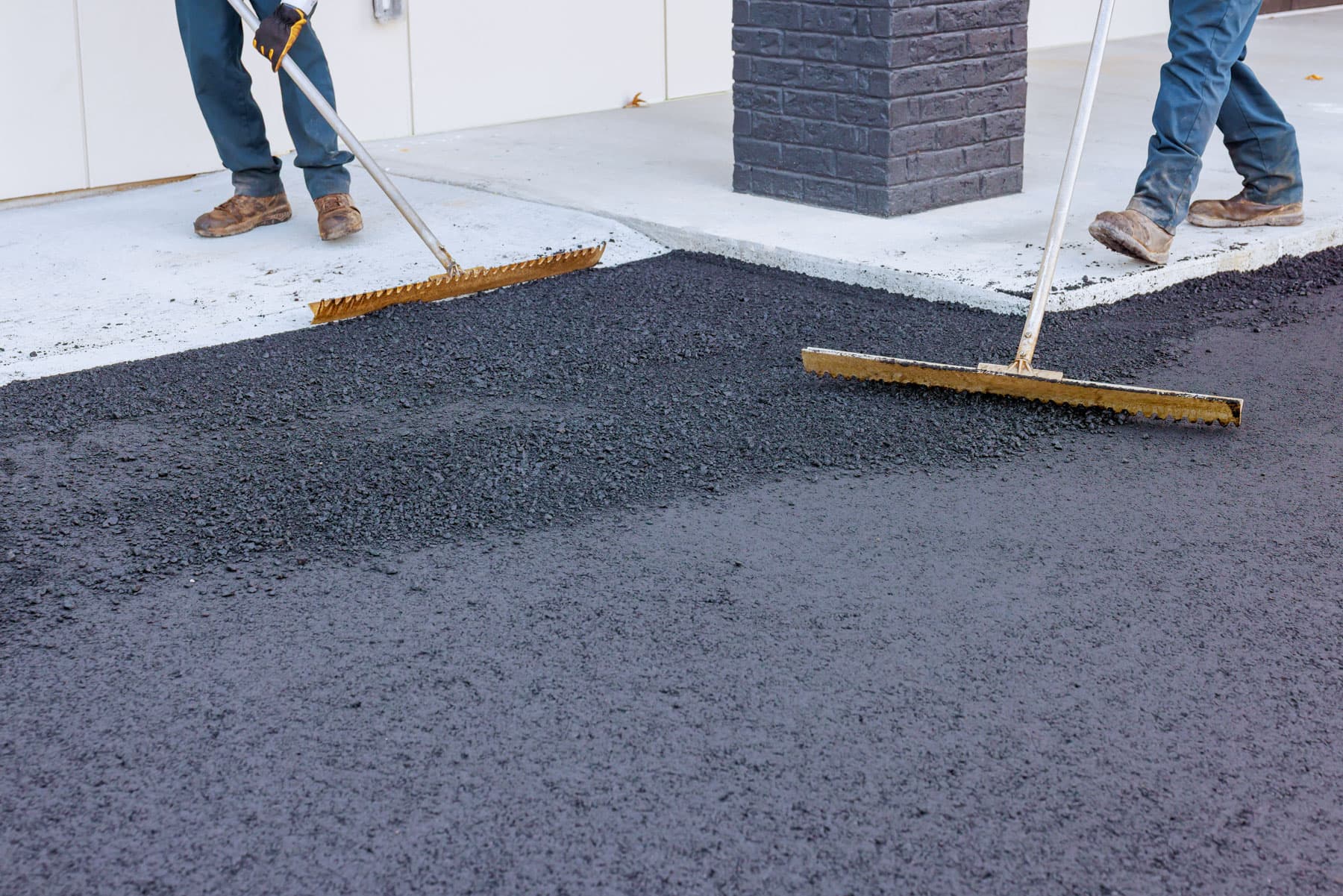
It's also faster to get back in service. A new asphalt driveway is usable within a couple of days. Concrete takes longer to cure.
Repairs are simpler too. Asphalt patches blend in well and bond to the existing surface. A concrete crack repair is structurally similar but visually obvious and harder to get right.
In Surrey's mix of wet winters and warm summers, asphalt handles the thermal cycling well. The slight flexibility means it tends to develop smaller, isolated cracks rather than the long, clean fractures concrete shows.
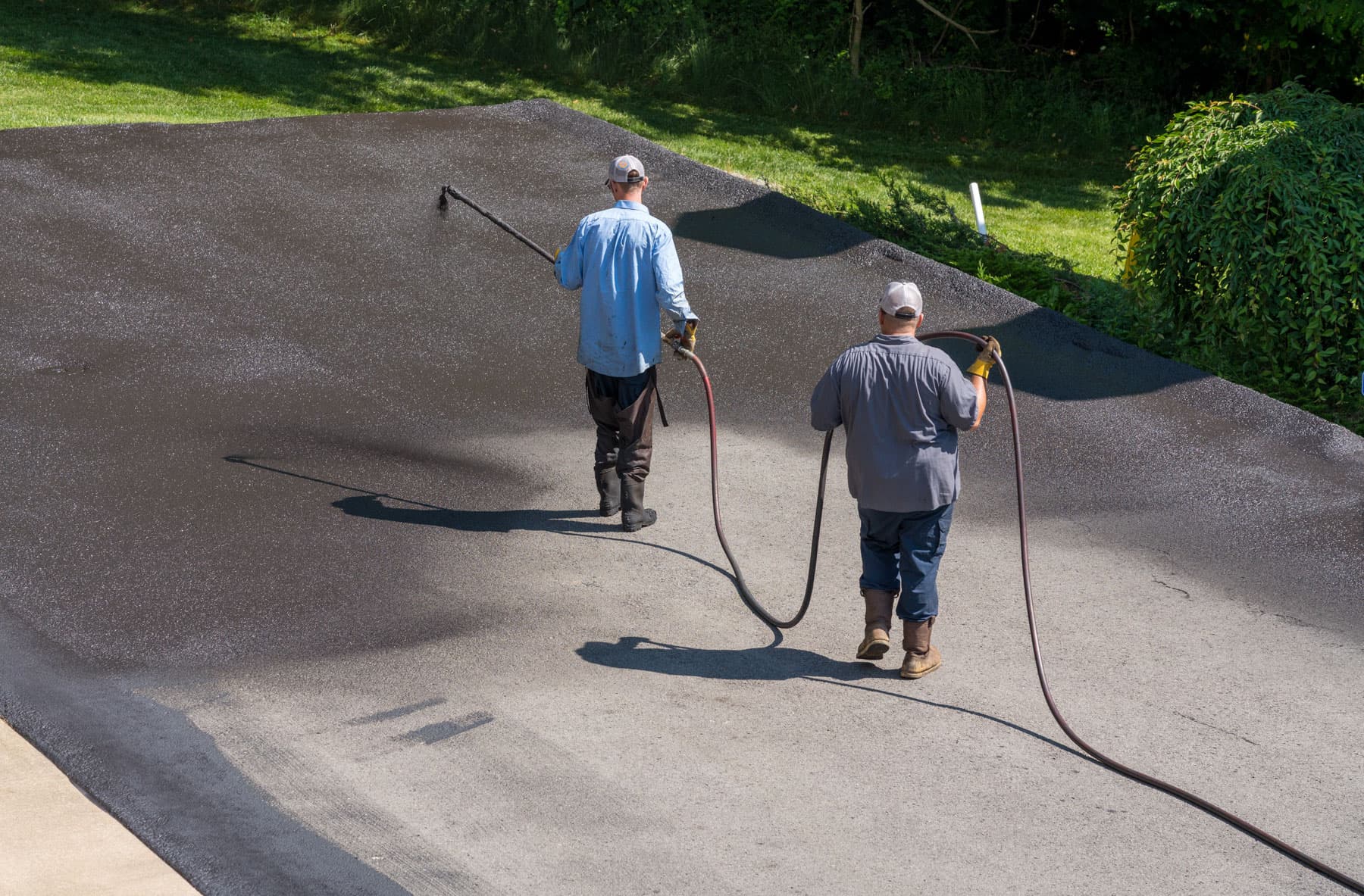
The main downsides: asphalt needs sealcoating every few years to maintain the surface and extend its life, and it softens in very hot weather, which can cause surface impressions from heavy vehicles. In Surrey summers, this is rarely a serious issue, but it's worth knowing.
Concrete driveways: the case for
Concrete typically lasts longer than asphalt if it's well-maintained and well-built. Thirty to fifty years is realistic for a good concrete installation. It also requires less ongoing maintenance: no sealcoating schedule.
Concrete doesn't soften in heat, so it handles heavy vehicles better. If you park a large RV or commercial truck regularly, concrete holds up to that load without surface impressions.
It also gives you more design options. Stamped, brushed, or exposed aggregate finishes are all possible with concrete. If appearance is a priority and you want something other than black asphalt, concrete has more choices.
The downsides are real: higher up-front cost, longer cure time before use, and significantly harder repairs when damage does occur. A cracked concrete slab is either patched visibly or replaced in full. There's no equivalent of an asphalt overlay for concrete.
Which lasts longer in the Lower Mainland?
Concrete installed and maintained properly outlasts asphalt. That's straightforward. But 'properly maintained' for concrete still means watching for cracks, avoiding de-icing salts, and sealing the surface every few years in wetter climates.
Asphalt maintained with regular sealcoating and crack filling lasts 20 to 30 years in Surrey. Concrete that's well-built and cared for can go 30 to 50 years. The gap narrows considerably when you factor in that concrete repairs are more expensive and less forgiving when they do come up.
For a budget-conscious homeowner who's willing to sealcoat on a regular schedule, asphalt gives you most of the longevity for a lower overall investment. For someone who wants the longer-term, lower-maintenance option and is willing to spend more up front, concrete is the stronger choice.
Our recommendation for most Surrey homeowners
For a standard residential driveway in Surrey, asphalt is the better practical choice. It handles our wet climate well, costs less, is faster to install, and is straightforward to maintain and repair. The sealcoating requirement isn't a burden: it's a couple of hours every few years.
If you have a specific reason to choose concrete, such as wanting a longer-lasting surface with minimal maintenance, accommodating very heavy vehicles, or wanting a decorative finish, those are all valid reasons. We're happy to talk through what makes sense for your property.
Frequently asked questions
- Both work well in Surrey. Asphalt is slightly more flexible, which helps in wet conditions with soil movement. The bigger factor for either material is drainage: a well-graded driveway that sheds water quickly will outlast a poorly drained one regardless of what it's made from.