Why Surrey Driveways Crack and Pothole Every Winter
Water is the real reason asphalt driveways crack and pothole in Surrey. It gets into small surface cracks, softens the base beneath, and breaks the driveway apart from the inside. Here's how to stop it before it starts.
Water is the cause. Almost every time.
If you've watched a crack in your driveway go from a hairline to a pothole over a couple of winters, water is what did it. This is true for almost every driveway failure we see in Surrey.
The sequence is simple: a small surface crack lets rainwater through. The water reaches the base layer underneath. The base softens and shifts. The asphalt above it loses its support and breaks. The next vehicle that drives over it finishes the job.
In our climate, this happens fast. We get sustained rain from October to March. A crack that forms in fall and doesn't get sealed will let in water all winter. By spring, what was a crack is a pothole.
The wet climate factor in the Lower Mainland
Surrey gets over 1,100 mm of rain a year. It's not the freeze-thaw cycling that wrecks driveways in colder provinces. What we deal with is prolonged saturation. Water sits against asphalt for months at a time.
Asphalt is porous. An unsealed surface absorbs moisture steadily over a wet season. The binders in the asphalt soften over time, the aggregate loosens, and the surface becomes brittle and prone to cracking. This is why a driveway that looks fine in May starts showing new damage every October.
Good drainage makes a significant difference here. A driveway that sheds rainwater off the edges dries between storms. One that holds water in low spots keeps the base saturated for weeks. That's the driveway that fails first.
How a bad base makes everything worse
The base is what asphalt sits on. A proper base is compacted granular material that distributes load and drains quickly. When it's built correctly, even if water gets through the surface, it doesn't sit there.
A base that was too thin, not compacted properly, or built over organic material like topsoil or old sod will settle unevenly over time. You see the result as low spots and cracking patterns that follow the settling underneath. These aren't surface problems. They're base problems, and no amount of patching fixes them without digging back down to the cause.
A lot of the driveways we get called to replace were built cheaply the first time. The homeowner got a low price, the contractor skipped the excavation and base compaction, and ten years later the surface is failing. Getting the base right at the start is always the better investment.
What different crack patterns tell you
Not all cracks are the same. The pattern tells you a lot about what's happening underneath.
Long straight cracks along the edges of a driveway usually mean the edges weren't supported properly or the sub-base at the edges has eroded. These are common and fixable.
Transverse cracks running across the driveway are often temperature-related. The asphalt contracts and expands with seasonal temperature changes. Filling these early stops water intrusion.
Alligator cracking, the pattern that looks like the skin of a crocodile, is a base failure sign. The surface is flexing because there's no support underneath. Patching it buys time but doesn't fix the underlying problem.
Potholes form when alligator cracks let enough water in that chunks of asphalt start breaking loose. At that stage, the damage is already done below the surface.
How to stop cracks before they turn into potholes
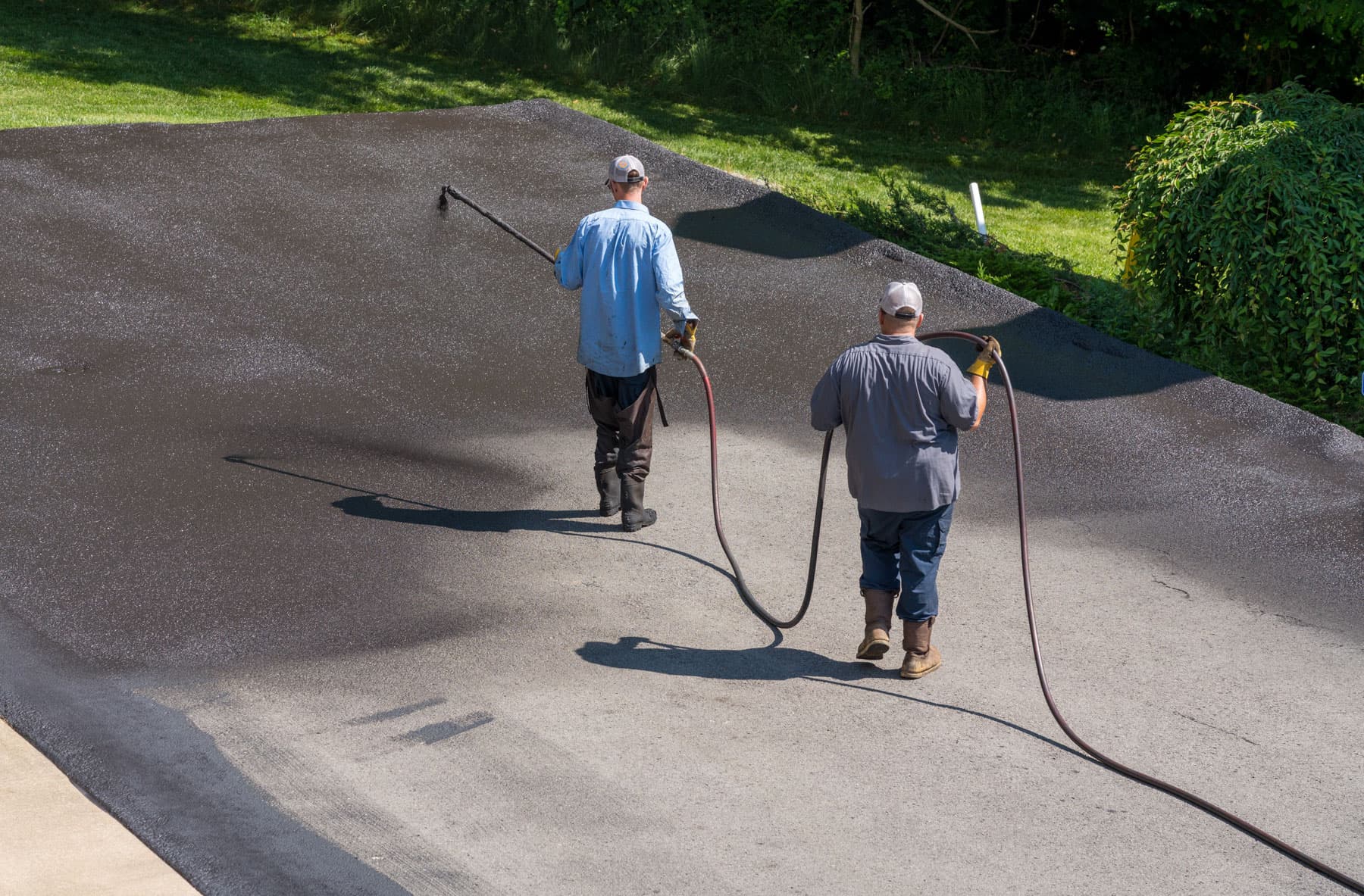
The best time to deal with a crack is when it's still small. Crack sealing with hot rubberized sealant closes the crack, stops water entry, and is quick and inexpensive. Done in late summer or early fall before the rains start, it protects the driveway through winter.
Sealcoating the whole surface every two to four years adds another layer of protection. It fills the small surface voids that water works through, protects the binders from UV and moisture, and slows down the oxidation that makes asphalt brittle.
Good drainage matters as much as surface treatment. If your driveway holds water in low spots, have it assessed. Resurfacing or regrading to fix the drainage prevents the conditions that cause cracking in the first place.
For driveways that already have widespread cracking or potholes, an honest assessment of the base condition is the starting point. Sometimes a resurfacing overlay is the right call. When the base has failed, replacement on a properly built new base is the only real fix.
Frequently asked questions
- Water is usually the cause. Small cracks let rain in, the water softens the base underneath the asphalt, and the surface breaks apart. Surrey's long wet season means a crack that isn't sealed before fall will be letting water in for months.