Surrey Parking Lot: Repave or Resurface? How to Tell the Difference
The difference between resurfacing and repaving comes down to one thing: the base. If it's solid, an overlay buys you 10 to 15 more years for less money. If the base has failed, overlaying it is money wasted. Here's how to tell which situation you're in.
The answer in one paragraph
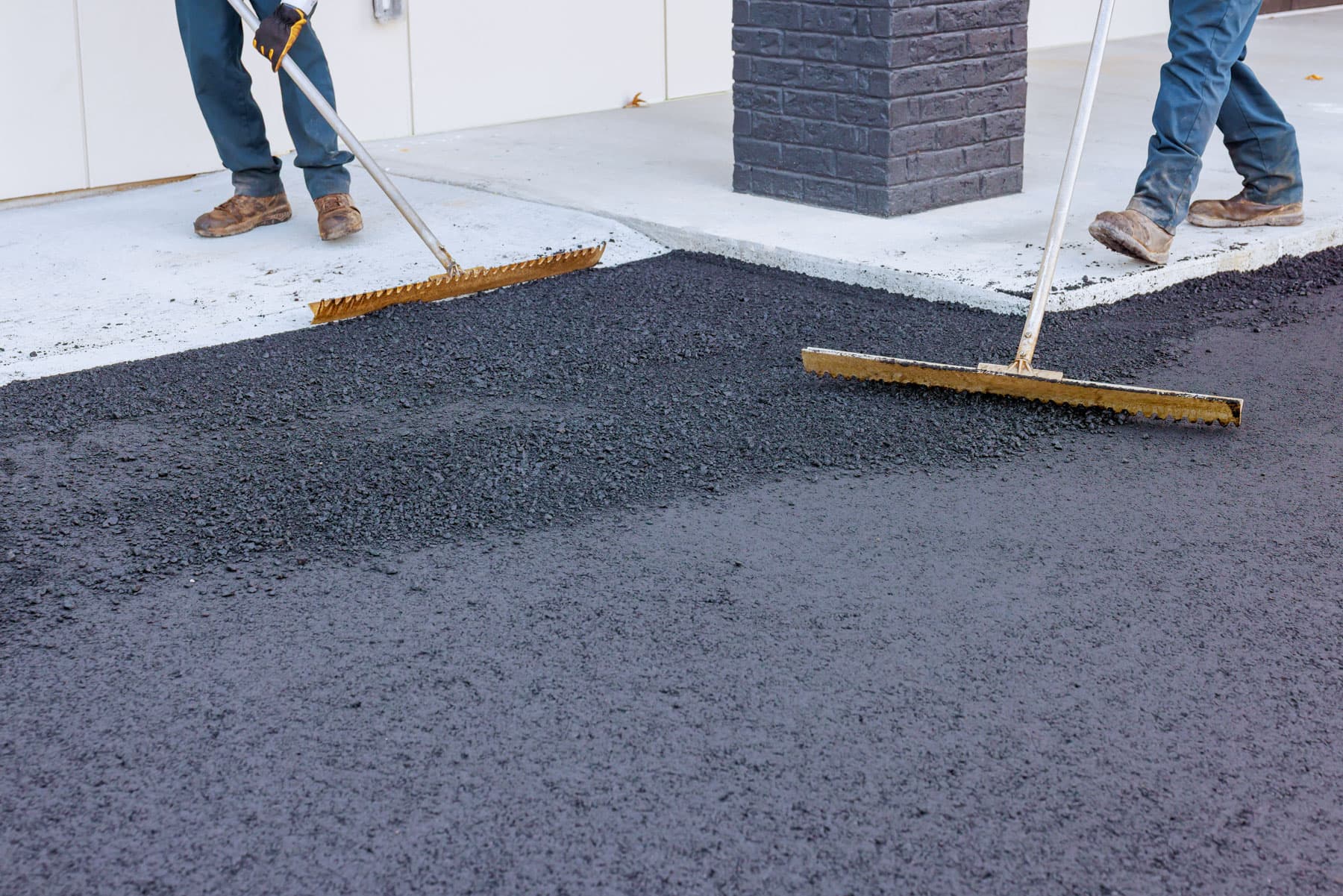
Resurfacing (overlay) lays 40 to 50 mm of new asphalt over your existing lot. It works when the base beneath the asphalt is still solid and stable. Full repaving removes the existing asphalt, reworks the base, and builds the surface from scratch. It costs more but is the only real fix when the base has failed.
Most parking lot owners wait too long to act, and by the time they call a contractor the lot has crossed from an overlay candidate to a full replacement. Knowing the signs early saves a significant amount of money.
What resurfacing actually does — and what it can't fix
An overlay adds a fresh layer of hot-mix asphalt on top of the existing surface. It gives the lot a clean, smooth appearance and seals the surface against water entry. When it's the right call, it extends the lot's life by 10 to 15 years at a lower cost than full removal and replacement.
What an overlay can't fix is anything that originates below the surface. Cracks caused by base movement will telegraph through new asphalt within one to three seasons, following exactly the same pattern as before. Low spots that hold water stay low because the grade comes from the base, not the surface layer. An overlay on a failing base doesn't reset the clock — it just delays the inevitable replacement by a year or two while costing you the overlay price.
This is why the decision starts with the base, not the surface. The surface is what you see. The base is what determines what you actually need.
The five damage patterns and what they mean
Reading a parking lot's damage tells you a lot about what's happening underneath. Here are the five patterns we look at on every site assessment.
Surface cracking only
Fine, shallow cracks that don't extend through the full depth of the asphalt are surface oxidation cracks. Asphalt binders harden and shrink as they age, especially in lots that haven't been sealcoated. These cracks don't mean base failure. A lot with surface cracking and a sound base is a good overlay candidate — though we often sealcoat and crack-fill first if the cracking is recent and limited.
Alligator cracking
A grid of interconnected cracks that looks like crocodile skin signals base failure. The asphalt is cracking in all directions because the layer underneath is no longer supporting it uniformly. You can confirm this by pressing on the cracked area: if the surface flexes or springs slightly underfoot, the base underneath is soft or compromised.
Alligator cracking is the most important signal that an overlay won't work. New asphalt laid over alligator-cracked surface will show the same pattern within two to three seasons because the base problem is still there.
Rutting and deformation
Channels worn into the lot surface in heavy turning areas, near lot entrances or in drive-through lanes point to asphalt that's too thin for the traffic load, asphalt that was laid in hot weather without proper compaction, or base material that's shifting. Shallow rutting on a sound base can sometimes be milled off and overlaid. Deep rutting that follows the base contour needs full removal.
Potholes and breakup
Potholes form when alligator cracking lets enough water into the base that chunks of asphalt break loose and get displaced by traffic. By the time potholes appear, the base is already compromised in that area. Patching potholes without fixing the base is a holding measure, not a repair. In a Surrey parking lot where the pothole has been there through more than one wet season, the base damage extends well beyond the visible hole.
Low spots and ponding
A well-built parking lot doesn't hold water. It drains to the edges or to catch basins. Low spots that collect water after rain suggest either poor original grading, settled base material, or drainage channels that have been undermined.
Low spots are especially problematic in Surrey's climate because water sits against the asphalt surface for extended periods through our wet season. This is the fastest way to degrade the base and accelerate surface cracking. A lot with persistent ponding needs the drainage issue fixed — not just the surface. Adding asphalt lift to a low area without addressing the drainage cause just creates a new high point around the same low spot.
Why Surrey's wet climate changes the math
Surrey averages over 1,100 mm of rain per year, most of it falling between October and March. This matters for parking lots in two ways.
First, water is the primary mechanism of asphalt failure. It enters through surface cracks, saturates the granular base, softens the material, and removes the support the asphalt layer needs. A crack that forms in October and isn't sealed sits open through five to six months of sustained rain before drying out in spring. By then, the water has done its work.
Second, the timing of maintenance work is more constrained here than in drier climates. Sealcoating and crack sealing need dry, warm conditions to bond and cure properly. The window in Surrey runs roughly from late April through October. Lots that miss the fall sealing window go through another full wet season unprotected.
This is why deferred maintenance compounds quickly in Surrey. A lot that misses one sealcoating cycle because the strata council didn't approve the budget doesn't just age one extra year. It ages two or three, because it goes through a full wet season with a more porous surface and wider unsealed cracks than it would have had otherwise.
How we actually check the base
A visual inspection tells us a lot but not everything. The crack patterns and surface condition guide us toward a likely answer. When there's any ambiguity, we core the lot: drilling a small diameter sample through the asphalt and into the base material.
A core sample shows us the thickness of the asphalt layer, whether it's delaminated (separated into layers), and what the base material looks like. A well-bonded full-depth core over firm, consistent base material is an overlay candidate. A core that shows thin, delaminated asphalt over weak or inconsistent base material is a replacement.
Core sampling also reveals surprises: lots where the original contractor put down half the specified asphalt thickness, lots where there's almost no granular base because the asphalt was laid directly on subgrade, and lots where the base is fine but the original asphalt spec was wrong for the traffic load. Knowing this before committing to a repair strategy avoids expensive mistakes.
Cost comparison over time: overlay vs. replacement
An overlay costs significantly less than full replacement upfront. If the base is sound, it's the better financial decision by a wide margin. A well-executed overlay extends the lot's life 10 to 15 years, and if the lot is properly maintained afterward, it performs reliably through that period.
Full replacement costs more upfront but delivers a properly built surface for the next 20 to 25 years. On a lot where the base has failed, replacement is less expensive over any 10-year horizon than the cycle of overlay, patch, overlay that many property owners end up in by trying to avoid the bigger cost.
The worst outcome, financially, is overlaying a lot that needed replacement. You spend money on the overlay, the cracks return within two to three years, the lot looks bad and becomes a liability issue, and you end up doing the full replacement anyway — having paid for both.
When is the right time to act?
The best time to resurface a Surrey parking lot is when the surface shows wear and cracking but the base is still solid. That's the window where you're getting 10 to 15 more years for an overlay price. Once the base has failed, that window is gone.
For strata councils and property managers, the practical advice is: get an assessment done now, before the next budget cycle, so you know what you're actually dealing with. If it's an overlay situation, plan it into the next budget. If it's a replacement, plan accordingly. The worst scenario is finding out the lot needs full replacement after you've already approved and spent money on an overlay.
In Surrey's climate, the best time for the actual work is late spring through early fall. If the lot is going to need work, get on a contractor's schedule in April or May for a summer job. Summer slots in Surrey fill up fast because every commercial property owner is trying to book the same dry-weather window.
Frequently asked questions
- The key is the base. If the base under the asphalt is still solid, resurfacing (overlay) works well. If you're seeing alligator cracking across large areas, spots where the surface flexes underfoot, or potholes that keep coming back, the base has usually failed and full repaving is the right fix.