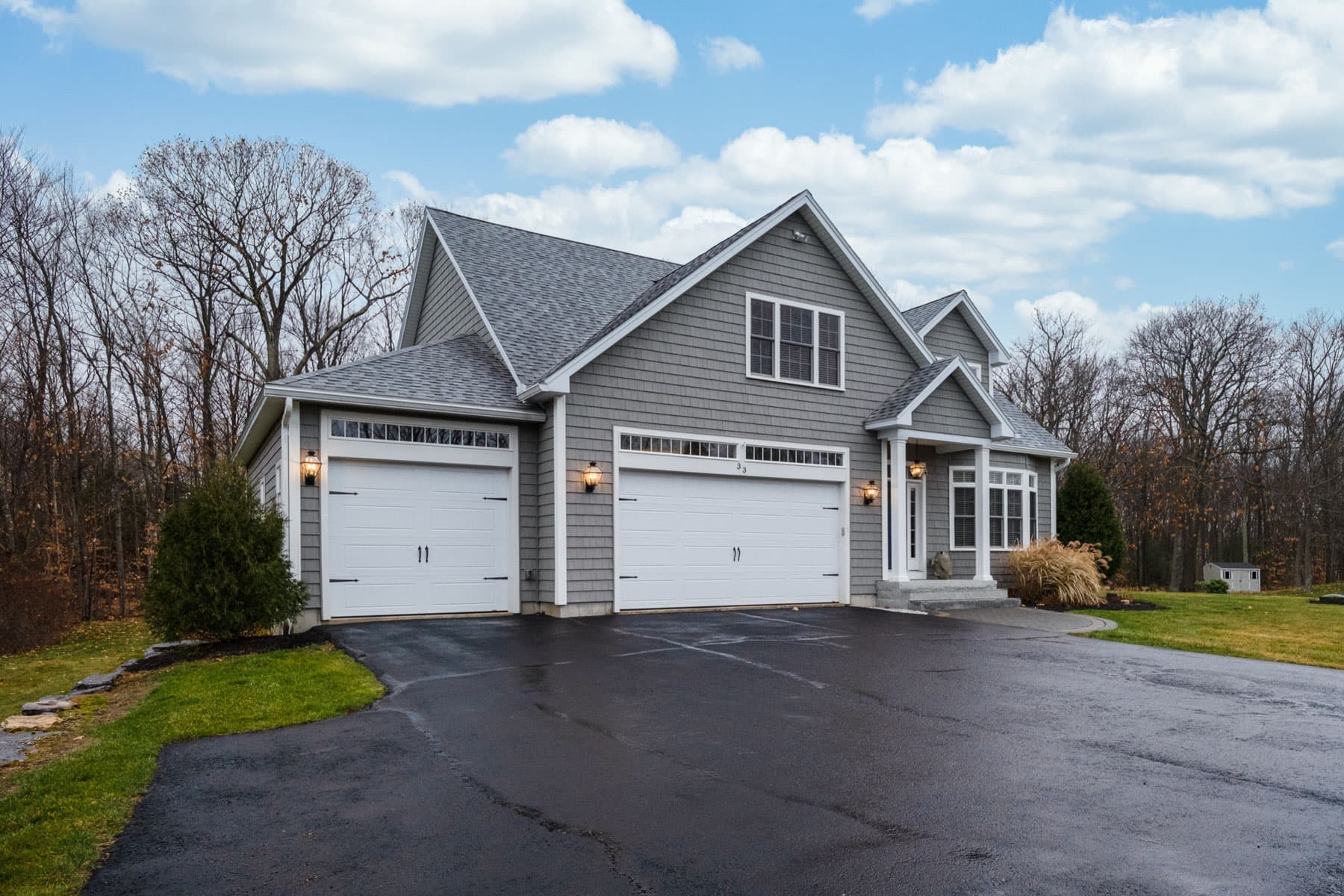
What's included in a new driveway
- Removal of existing asphalt, gravel or sod
- Excavation to proper depth
- Granular base installation and compaction
- Grading to ensure water runs off
- Hot-mix asphalt laid and machine-rolled
- Clean hand-finished edges and transitions
- Smooth tie-ins to garage, sidewalk and road
- Advice on cure time and first sealcoat timing
Why Surrey driveways fail earlier than they should
A lot of the Surrey driveways we replace were built in the 1970s and 80s when the city was growing fast and builders were cutting costs on base prep. Guildford, Fleetwood and Newton all have large neighbourhoods of homes from that era where the original driveway asphalt was laid thin over minimal base. These driveways were never going to last 30 years. Many are already crumbling.
Surrey's rainfall is the other factor. We get over 1,100 mm of rain a year, and most of it falls between October and March. A driveway that isn't graded to shed water holds puddles for days. That water works into surface cracks, softens the base below, and the freeze-thaw cycles we do get in November and February push those cracks apart from the inside. Within a few wet seasons, a small crack becomes a pothole, and the pothole signals that the base has started failing.
The other common cause: driveways that weren't excavated deep enough. Some contractors in Surrey skim the sod, put down a thin layer of gravel and pave over it. Two or three years later, the soft organic material underneath settles unevenly and the driveway cracks through the settled spots. There's no fixing this without tearing it out and starting over.
New driveway installation: what to expect
A proper new driveway starts with excavation to remove the existing surface and any soft or organic material underneath. The depth depends on the subgrade conditions. We compact the subgrade, bring in clean granular base material, spread and compact it in lifts, and grade it carefully so water drains away from the garage and house rather than pooling.
Hot-mix asphalt goes down in layers. A residential driveway in Surrey typically gets 75 to 100 mm of compacted asphalt in two lifts. We hand-finish the edges for a clean line and tie the driveway smoothly into your garage threshold, any existing sidewalks, and the street. The final surface is rolled for a smooth, even finish.
Most residential driveways in Surrey take one day to pave. You can drive on it lightly the next day. We'll walk you through cure time expectations and tell you when to book the first sealcoat, which should be no earlier than six months after paving.
Width and layout considerations
The most common driveway width in Surrey is the two-car design at around 5.5 to 6 metres. More homeowners in South Surrey, Fleetwood and the newer areas near Clayton are asking for wider driveways now: 6.5 to 7 metres to accommodate a truck plus a second vehicle, or to allow for an EV charger access point on the side of the garage without having to shuffle cars. Some homeowners add a flared apron at the street to make entry and exit easier, especially on lots with a shallow setback.
If you're planning a boat or RV pad beside the driveway, do it at the same time as the main paving. Matching the base depth and tie-in level between the driveway and a side pad is much easier in one job than trying to add it later.
Driveway resurfacing: when it's the right call
Resurfacing, or overlay, puts a fresh layer of asphalt over the existing driveway without a full tear-out. It's a good option when the base is still solid and stable, the existing asphalt is bonded well to it, and the damage is mostly surface-level: oxidation, fading, surface cracking without base involvement.
Overlay typically adds a 40 to 50 mm layer of new asphalt, which adds a bit of height at the garage threshold and street apron. We manage these transitions carefully so the finished driveway rolls in smoothly. Done right, a resurfacing job gives the driveway another 10 to 15 years.
We won't recommend overlay when the base has failed. If you're seeing wide cracks following a grid-like or alligator pattern, low spots where water collects, or the surface flexes when you walk on it, those are base failure signs. Putting new asphalt over a failed base follows the same cracks and slopes within a few years. We'd rather tell you that upfront than take your money for a job that won't hold.
Driveway widening in Surrey
Driveway widening is one of the most requested jobs we do across Surrey, and it's become more common as households add a second vehicle, an EV, a truck, or want easier access for tradespeople. The job involves excavating the area beside the existing driveway to the same depth as the original base, matching the granular base specification, and paving a new section tied flush to the existing edge.
The trickiest part is matching the existing asphalt's height at the joint. Old driveways settle slightly and may not be exactly level. We feather the joint carefully so there's no lip or step between old and new. The seam will always be visible, but it should be flush and tight.
Widening is common in Fleetwood, where the original single-car driveways on family homes built in the 1990s are being expanded as kids get their own cars. It's also a popular job in South Surrey, where newer large homes sometimes have driveways that weren't built quite wide enough for the four-car garage they have.
Surrey neighbourhoods where we work most
Guildford
The streets around Guildford Town Centre have a lot of homes built in the 1970s and 80s. Many of these driveways are original, and they're past the point where resurfacing helps. We see a lot of full driveway replacements in the neighbourhoods between 104 Avenue and 96 Avenue in Guildford. The base from the original build is usually very thin, so we excavate deeper than the old surface required and build it properly the second time.
Fleetwood
Fleetwood has a lot of family homes from the 1990s and early 2000s, and the driveways from that era are starting to show their age. With the SkyTrain extension along Fraser Highway now complete and property values climbing, many Fleetwood owners are investing in the exterior of the home. Driveway replacement is one of the first things people do. We also do a lot of widening here: the standard single-width drives from that era don't fit the way families actually live now.
Cloverdale
Cloverdale has a wide range of properties, from tight in-town lots near the historic town centre and the Cloverdale Fairgrounds, to larger acreage parcels out toward the agricultural areas near the Langley border. Acreage driveways in Cloverdale are often long, sometimes 30 to 60 metres from the road to the house, and they require proper drainage grading and a strong base to handle the length without sagging in the middle. We grade these carefully so water runs to the edges rather than channelling down the center.
South Surrey and White Rock
South Surrey, from Morgan Crossing and Grandview Heights down toward the White Rock border, has newer and larger homes where the driveway is a visible part of the home's street presence. Property owners here tend to want cleaner finishes and wider surfaces. Some want stamped or exposed aggregate borders around a black asphalt field, and we can accommodate these combinations. White Rock's hillside properties above Marine Drive have steep, short driveways that need specific grading so water doesn't run back into the garage. The salt air doesn't affect asphalt directly, but older driveways in White Rock that have never been sealcoated show more surface oxidation than similar driveways inland.
Newton and Whalley
Newton has a dense mix of older single-family homes, many with narrow original driveways built for one car. Homeowners here often want a wider pad to fit two vehicles or to park a work truck at home. Whalley and City Centre are changing fast with densification, but the older single-family homes in the surrounding streets still have original driveways that are well overdue for replacement. We're familiar with the soil conditions throughout Newton, which can have areas of poorer bearing capacity that need extra excavation and base building.
The process from call to finished driveway
- 1
Site visit and quote
We come out, look at the existing surface and grade, talk through what you want, and give you a written quote. No pressure, no obligation.
- 2
Schedule and prep
Once you're ready to go, we book the job. We let you know what to move: vehicles, planters, anything close to the driveway edge. We handle the street permit if one is needed.
- 3
Tear-out and excavation
We remove the old surface and excavate to the right depth. Any soft or organic material comes out. We haul everything away.
- 4
Base installation
Clean granular base goes in and we compact it in layers. Drainage grade is set here: this is the step that determines how the finished driveway handles rain.
- 5
Paving
Hot-mix asphalt goes down, machine-rolled for a smooth finish. Edges hand-finished. Transitions tied in to garage, sidewalk and street.
- 6
Cure and sealcoat
Light traffic in 24 to 48 hours. Avoid heavy loads and sharp turning for the first few weeks. Book the first sealcoat six months later.
Driveway paving across Surrey and Metro Vancouver
We do driveway paving throughout Surrey and the surrounding area: City Centre, Guildford, Fleetwood, Newton, Cloverdale, South Surrey, White Rock, North Delta, and into Langley. Call us or fill out the form for a free, on-site quote.
Driveway paving FAQs
- A properly built driveway with a good base and regular sealcoating lasts 20 to 30 years in Surrey's climate. The base is the biggest factor: driveways built thin or without proper compaction start cracking much sooner, often within 8 to 12 years.